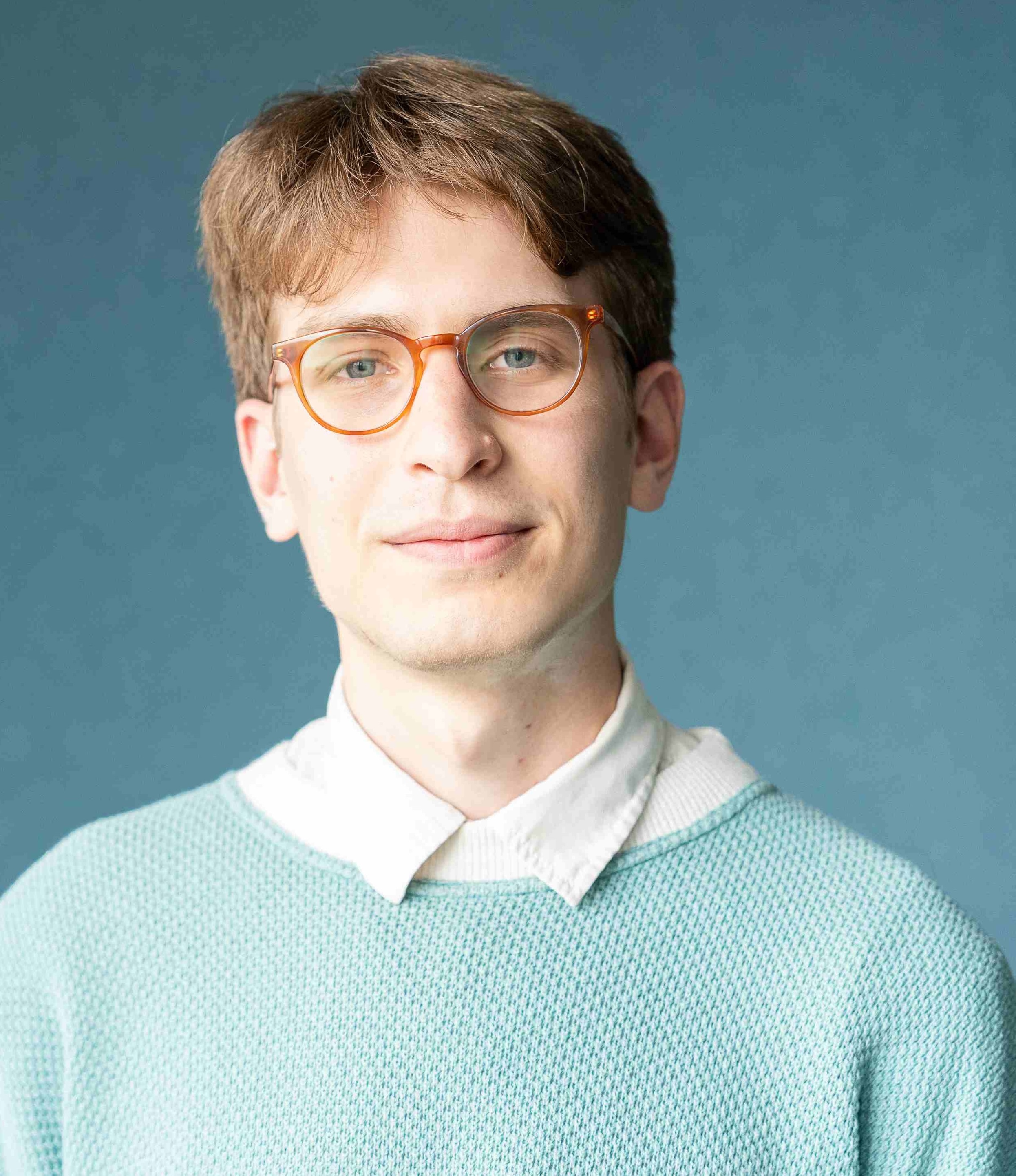
Ivan Pavlov
MS Data Science @ EPFL · ML Researcher · Zurich, Switzerland
I'm a master's student at EPFL (GPA 5.83/6.0) with a background in ML engineering and research at ETH Zurich and Oracle Labs. My current work focuses on AI Safety — specifically understanding emergent misalignment in fine-tuned LLMs. Broadly, I'm interested in LLMs, alignment, and building reliable AI systems. Outside of research I enjoy sailing and bouldering.
Publications
Apertus: Democratizing Open and Compliant LLMs for Global Language Environments
A fully open suite of LLMs (8B & 70B) pretrained exclusively on openly available, compliance-filtered data spanning 1,800+ languages (~40% non-English). Employs the Goldfish objective to reduce memorization. Releases training code, data pipelines, checkpoints, and evaluation suites for full reproducibility.
Projects
Finding Explanations for Emergent Misalignment in LLMs
Learning & Adaptive Systems (LAS) Group, ETH Zurich · Supervised by Cynthia Xin Chen & Lukas Fluri
Fine-tuned LLMs sometimes exhibit strikingly misaligned behavior — an unsettling phenomenon with no agreed mechanistic account. This project evaluates candidate explanations using linear probes, SAE features, and activation steering to determine what internal representations shift during fine-tuning and which shifts are causally responsible for misaligned outputs.
Post-training for SwissAI Apertus: SFT → DPO
CLAIRE Lab, EPFL
Reproduced the Tülu3 post-training pipeline on Llama 3.1 8B and adapted it to the SwissAI Apertus (8B/70B) models: full SFT run followed by DPO. Discovered that DPO degraded MMLU despite clean training metrics — a concrete example of optimization signal diverging from downstream capability. Extended the olmes evaluation harness with vLLM + tensor parallelism, seven standard benchmarks, and automated SLURM job generation; productionized the DPO trainer in the SwissAI codebase with full W&B logging.
Auxiliary Evidence Routing for Egocentric Video QA
EPFL
Tests whether targeted external evidence helps a frozen video-native VLM (Qwen2-VL-7B) answer HD-EPIC multiple-choice questions under compute constraints. The model receives one of three conditions: native video alone, tool-selected evidence alone, or native video augmented with evidence. Six evidence-selection tools were evaluated (CLIP retrieval, motion+CLIP cascade, OCR crop, object tracking) alongside routing strategies ranging from keyword rules to TF-IDF classifiers. Key finding: a hand-crafted rule-based router achieved +3.9 pp over fixed-tool baselines, while learned classifiers consistently underperformed — pointing to a hard within-category gap of 16 pp that cheap visual features cannot close.
LBM 2D — Serial, MPI & CUDA
EPFL · Parallel and High Performance Computing
A 2D Lattice Boltzmann solver (D2Q9, BGK collision) for flow past one or two circular cylinders in a rectangular channel. The repository contains three solvers: a serial reference implementation, a distributed-memory MPI version, and a hand-written CUDA kernel — plus the profiling and scaling studies behind them. Covers domain decomposition, halo exchange, GPU memory layout, and strong/weak scaling analysis.
Discrete Mathematics: Beginner Level
Author
A modern interactive textbook covering combinatorics, graph theory, probability, logic, and algorithm complexity. 300+ auto-graded problems with Python examples. The Russian edition has the larger following.
Algorithmic Interview Problems: Beginner Level
Co-creator & Teaching Assistant
Covers greedy algorithms, divide-and-conquer, and dynamic programming through 55 interactive interview-style problems with hints and detailed solutions. 91 lessons, 8 h/week pace.
Education
EPFL — École Polytechnique Fédérale de Lausanne
Master of Science in Data Science
GPA 5.83 / 6.0
Sep 2024 – Dec 2026
Saint Petersburg State University
Bachelor of Science in Computer Science, Faculty of Math and CS
GPA 4.91 / 5.0 · with honors
Sep 2018 – Jun 2022